

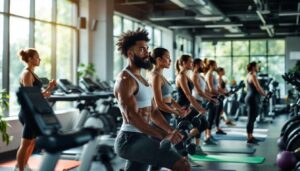


Fitness enthusiasts and beginners alike are discovering that expensive gym memberships and bulky equipment aren’t necessary to achieve a toned, healthy physique. Bodyweight exercises offer a practical, effective alternative that can be performed anywhere, from a hotel room to a local park. These movements leverage your own body mass as resistance, creating a challenging workout that builds strength, improves flexibility, and enhances overall fitness. With just seven fundamental exercises, you can develop a comprehensive routine that targets every major muscle group while fitting seamlessly into even the busiest schedule.
The benefits of bodyweight exercises
Accessibility and convenience
One of the most compelling advantages of bodyweight training is its universal accessibility. Unlike traditional gym workouts that require specialized machines or weights, these exercises demand nothing more than your physical presence and a small amount of floor space. This means you can maintain your fitness routine while traveling, during lunch breaks at work, or in the comfort of your living room. The elimination of equipment costs and gym fees makes bodyweight training an economically smart choice for individuals on any budget.
Functional strength development
Bodyweight exercises excel at building functional strength that translates directly to everyday activities. Rather than isolating individual muscles as many machine-based exercises do, these movements engage multiple muscle groups simultaneously, improving coordination and balance. This approach mirrors how your body naturally moves throughout daily life, making tasks like lifting groceries, climbing stairs, or playing with children significantly easier.
Reduced injury risk
Training with your bodyweight typically presents a lower risk of injury compared to heavy weightlifting. The movements follow natural biomechanical patterns, and the resistance is inherently limited to what your body can safely handle. Key safety benefits include:
- Lower impact on joints and connective tissues
- Improved body awareness and control
- Progressive difficulty that matches your strength level
- Minimal risk of dropping weights or equipment malfunction
Understanding these foundational benefits sets the stage for exploring the specific exercises that form the cornerstone of an effective bodyweight routine.
Squats: a comprehensive exercise
Proper squat technique
The squat stands as one of the most effective lower-body exercises available, engaging the quadriceps, hamstrings, glutes, and core muscles simultaneously. To perform a proper squat, stand with feet shoulder-width apart, toes pointing slightly outward. Lower your body by bending at the knees and hips, as if sitting back into a chair, keeping your chest upright and weight distributed through your heels. Descend until your thighs reach parallel to the ground, then drive through your heels to return to the starting position.
Variations for progression
As your strength improves, several squat variations can increase the challenge and prevent plateaus:
- Jump squats for explosive power
- Single-leg pistol squats for advanced practitioners
- Sumo squats to emphasize inner thighs
- Pulse squats to maintain constant muscle tension
Performing three sets of 15-20 repetitions provides an excellent starting point for beginners, while intermediate exercisers may aim for 25-30 repetitions per set. With your lower body thoroughly engaged, the next exercise shifts focus to the upper body.
Push-ups: strengthen your chest and triceps
Mastering the standard push-up
The push-up remains a timeless exercise for developing upper body strength, particularly in the chest, shoulders, and triceps. Begin in a plank position with hands placed slightly wider than shoulder-width apart, body forming a straight line from head to heels. Lower your chest toward the ground by bending your elbows, keeping them at approximately a 45-degree angle from your torso. Push back up to the starting position, maintaining core engagement throughout the movement.
Modifications and advanced options
The beauty of push-ups lies in their scalability to match any fitness level. Beginners can start with incline push-ups against a wall or elevated surface, gradually progressing to knee push-ups before attempting the full version. Advanced practitioners can explore:
| Variation | Primary Benefit | Difficulty Level |
|---|---|---|
| Diamond push-ups | Increased triceps activation | Advanced |
| Wide-grip push-ups | Greater chest engagement | Intermediate |
| Decline push-ups | Upper chest development | Advanced |
| Plyometric push-ups | Explosive power | Expert |
After building upper body strength, attention turns to exercises that enhance lower body stability and coordination.
Lunges: work legs and balance
Executing proper lunge form
Lunges provide exceptional benefits for leg strength while simultaneously challenging your balance and coordination. Stand with feet hip-width apart, then step forward with one leg, lowering your hips until both knees bend at approximately 90-degree angles. Your front knee should align directly above your ankle, while your back knee hovers just above the ground. Push through the front heel to return to the starting position, then repeat on the opposite side.
Targeting different muscle groups
Different lunge variations emphasize specific muscle groups and movement patterns. Reverse lunges reduce stress on the knees while maintaining effectiveness, making them ideal for individuals with joint concerns. Walking lunges add a dynamic element that improves functional movement patterns, while lateral lunges target the often-neglected inner and outer thigh muscles. Side lunges also enhance hip mobility and strengthen the muscles responsible for lateral stability.
Completing 10-15 lunges per leg for three sets creates a solid foundation, with the option to increase repetitions as endurance improves. Building on this foundation of lower body work, core stability becomes the next priority.
Planking: a flat belly with no effort
The plank position explained
The plank represents one of the most efficient core-strengthening exercises, engaging not just the abdominal muscles but also the back, shoulders, and glutes. Assume a position similar to the top of a push-up, but rest on your forearms instead of your hands. Your body should form a perfectly straight line from head to heels, with core muscles contracted to prevent sagging hips or raised buttocks. Hold this position while breathing steadily.
Duration and progression guidelines
Beginners should aim to hold a plank for 20-30 seconds, gradually increasing duration as core strength develops. Research suggests that maintaining proper form is more important than duration, so quality always trumps quantity. Progressive goals might include:
- 30-second holds for beginners
- 60-second holds for intermediate exercisers
- 90-second to 2-minute holds for advanced practitioners
- Multiple sets with brief rest periods between holds
Side planks add rotational core strength, while plank variations incorporating leg or arm lifts increase the challenge substantially. With core stability established, the intensity can escalate through full-body movements.
Burpees: burn calories quickly
Breaking down the burpee movement
Burpees combine multiple exercises into one fluid, high-intensity movement that elevates heart rate while building strength. Begin standing, then drop into a squat position and place your hands on the ground. Kick your feet back into a plank position, perform a push-up, then jump your feet back toward your hands. Explosively jump upward with arms extended overhead, then immediately begin the next repetition.
Caloric expenditure and cardiovascular benefits
The metabolic demand of burpees makes them exceptionally effective for calorie burning and cardiovascular conditioning. Studies indicate that high-intensity exercises like burpees can burn approximately 10 calories per minute, though individual results vary based on body weight, intensity, and fitness level. Beyond immediate calorie burn, burpees create an afterburn effect where the body continues consuming elevated oxygen and burning calories for hours after the workout concludes.
Starting with sets of 5-10 burpees allows beginners to acclimate to the movement’s intensity, while experienced exercisers might perform 15-20 repetitions per set or incorporate burpees into interval training protocols. After this intense full-body work, proper recovery becomes essential.
Stretching: for optimal recovery
The importance of post-workout stretching
While often overlooked, stretching plays a crucial role in any comprehensive fitness program. Post-exercise stretching helps reduce muscle tension, improves flexibility, enhances circulation to tired muscles, and may decrease next-day soreness. Dedicating 5-10 minutes to stretching after your bodyweight workout accelerates recovery and prepares your body for subsequent training sessions.
Essential stretches for bodyweight training
Focus on stretches that target the muscle groups emphasized during your workout. Hold each stretch for 20-30 seconds without bouncing, breathing deeply throughout. Key stretches include:
- Quadriceps stretch: standing or lying, pull heel toward buttocks
- Hamstring stretch: seated or standing forward fold
- Hip flexor stretch: low lunge position with back knee down
- Chest stretch: doorway stretch with extended arms
- Shoulder stretch: cross-body arm pulls
- Triceps stretch: overhead elbow pulls
Incorporating dynamic stretching before workouts and static stretching afterward creates a balanced approach that maximizes performance while minimizing injury risk.
These seven bodyweight exercises provide a complete fitness solution that requires no equipment, gym membership, or significant time investment. Squats and lunges build lower body strength and stability, while push-ups develop the chest, shoulders, and arms. Planks create core stability that supports all movement patterns, and burpees deliver intense cardiovascular conditioning alongside full-body strengthening. Proper stretching ensures recovery and maintains flexibility. By consistently performing these movements with proper form and progressive intensity, anyone can achieve significant improvements in strength, endurance, and body composition regardless of location or budget constraints.