



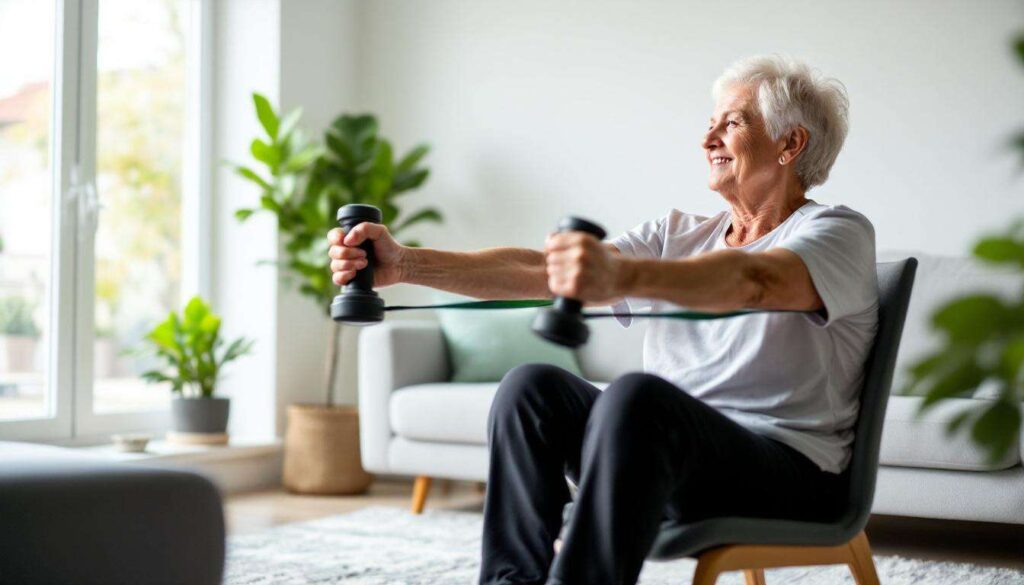
Maintaining muscle strength becomes increasingly challenging as we age, yet it remains crucial for independence and quality of life. Many people over 60 assume they need expensive gym memberships or complex equipment to build muscle effectively. The reality is that seated exercises can deliver remarkable results while reducing strain on joints and minimizing fall risks. These targeted movements allow older adults to rebuild muscle mass safely and efficiently from the comfort of a chair.
Understanding the importance of seated exercises after 60
Age-related muscle loss, known as sarcopenia, affects nearly everyone past their sixth decade. This natural process accelerates without intervention, leading to weakness, reduced mobility, and increased vulnerability to injuries. Seated exercises address this challenge by providing stability and support while targeting key muscle groups that deteriorate most rapidly with age.
Why traditional gym workouts may not suit everyone
Conventional gym routines often present obstacles for older adults. Balance issues, joint pain, and cardiovascular limitations can make standing exercises risky or uncomfortable. The intimidating atmosphere of fitness centers and the complexity of modern equipment create additional barriers. Seated exercises eliminate these concerns by offering a controlled environment where participants can focus entirely on proper form and muscle engagement without worrying about stability.
The science behind muscle rebuilding at any age
Research demonstrates that muscles retain their capacity to respond to resistance training throughout life. The key lies in consistent, appropriate stimulation rather than intensity alone. Seated exercises provide sufficient resistance to trigger muscle protein synthesis, the biological process responsible for muscle growth and repair. When performed regularly, these movements can reverse years of muscle decline.
Understanding these fundamentals sets the stage for exploring the specific advantages that seated exercises offer for overall muscle health and functional fitness.
The benefits of seated exercises for muscle health
Seated workouts deliver multiple advantages that make them particularly effective for the over-60 population. These benefits extend beyond simple muscle building to encompass overall health improvements and practical daily life enhancements.
Enhanced safety and reduced injury risk
The primary advantage of seated exercises is dramatically reduced fall risk. With a stable base of support, participants can concentrate on muscle contraction without balancing concerns. This safety factor encourages consistency, which ultimately determines success in any fitness program.
Targeted muscle engagement
Chair-based movements allow for precise isolation of specific muscle groups. This targeted approach ensures balanced development and addresses individual weaknesses effectively. The following benefits emerge from regular practice:
- Improved posture through strengthened back and core muscles
- Enhanced grip strength and upper body functionality
- Better leg strength for standing and walking activities
- Increased joint flexibility and range of motion
- Reduced chronic pain through proper muscle support
Accessibility and convenience
These exercises require minimal equipment and space, making them accessible to virtually everyone. Whether at home, in assisted living facilities, or while traveling, seated workouts can be performed anywhere a sturdy chair is available. This convenience eliminates common excuses and promotes adherence to exercise schedules.
With these benefits clearly established, examining specific exercises reveals how to maximize muscle rebuilding potential through strategic movements.
Exercise 1: arm strengthening with light weights
Building upper body strength remains essential for daily tasks like carrying groceries, lifting grandchildren, and maintaining independence. This seated arm exercise targets the biceps, triceps, and shoulders simultaneously while protecting vulnerable joints.
Proper form and execution
Begin by sitting upright in a sturdy chair with feet flat on the floor. Hold light weights between one and five pounds in each hand, with arms hanging naturally at your sides. Execute the movement by slowly curling both weights toward your shoulders while keeping elbows close to your body. Hold for two seconds at the top, then lower with controlled resistance for a count of three. This eccentric phase proves particularly effective for muscle building.
Progression and repetition guidelines
Start with two sets of eight repetitions, resting one minute between sets. As strength improves, increase to three sets of twelve repetitions before adding weight. The following progression schedule ensures steady gains:
| Week | Sets | Repetitions | Weight |
|---|---|---|---|
| 1-2 | 2 | 8 | 1-2 lbs |
| 3-4 | 2 | 10 | 2-3 lbs |
| 5-6 | 3 | 10 | 3-4 lbs |
| 7+ | 3 | 12 | 4-5 lbs |
Mastering upper body strength creates a foundation for addressing lower body muscle groups equally important for mobility and balance.
Exercise 2: leg workout with heel raises
Lower body strength directly impacts walking ability, stair navigation, and fall prevention. Seated heel raises specifically target the calf muscles and ankle stabilizers while remaining completely safe for those with balance concerns.
Step-by-step technique
Sit forward in your chair with feet flat and hip-width apart. Place hands on your thighs for stability. Slowly lift both heels off the ground, rising onto the balls of your feet while keeping toes planted. Hold the elevated position for three seconds, feeling the intense contraction in your calf muscles. Lower heels back to the floor with control, completing one full repetition.
Variations for increased difficulty
As this movement becomes easier, implement these progressions to continue building muscle:
- Perform single-leg raises by lifting one foot completely off the floor
- Add resistance by placing a weighted bag across your thighs
- Increase hold time at the top position to five or seven seconds
- Execute the movement more slowly, taking five seconds to rise and five to lower
While leg strength provides mobility, maintaining a healthy back and proper posture ensures these gains translate into functional improvements throughout daily activities.
Exercise 3: back stretches for better posture
Postural decline contributes significantly to the appearance and feeling of aging. Seated back stretches combat the forward slump that develops from years of sitting, strengthening the erector spinae and rhomboid muscles responsible for upright positioning.
Executing the seated back extension
Sit tall with your back away from the chair rest. Place hands behind your head with elbows pointing outward. Gently arch your upper back while drawing shoulder blades together, opening your chest toward the ceiling. This extension movement counteracts the rounded posture common in older adults. Hold for five seconds while breathing normally, then return to neutral position.
Complementary stretching movements
Enhance results by incorporating these additional back-focused stretches into your routine:
- Seated spinal rotation by gently twisting torso left and right
- Shoulder blade squeezes holding for ten seconds
- Forward fold with arms extended to stretch lower back
- Side bends to target lateral muscles and improve flexibility
A strong, flexible back supports the core muscles that stabilize the entire body during movement and rest.
Exercise 4: core engagement with trunk twists
Core strength serves as the foundation for virtually all movement patterns. Seated trunk twists activate the obliques, transverse abdominis, and deep stabilizer muscles without placing stress on the spine or requiring floor exercises that may be difficult to perform.
Proper twisting technique
Sit upright with feet planted firmly on the floor. Cross arms over your chest or extend them straight ahead. Keeping hips facing forward, rotate your upper body to the right as far as comfortable, using your core muscles rather than momentum. Hold the twisted position for two seconds, feeling the contraction along your waistline, then return to center and repeat on the left side. This constitutes one complete repetition.
Maximizing core activation
To ensure optimal muscle engagement, focus on these critical elements:
- Maintain an upright spine throughout the movement
- Breathe steadily without holding your breath
- Move slowly and deliberately rather than using momentum
- Keep abdominal muscles contracted even in the neutral position
- Avoid twisting beyond your comfortable range of motion
These four exercises create a comprehensive muscle-building program, but their effectiveness depends entirely on consistent implementation and proper integration into daily life.
Incorporate these exercises into your daily routine for optimal results
Knowledge without action produces no results. Transforming these exercises into lasting habits requires strategic planning and realistic expectations about the muscle-building timeline.
Creating a sustainable schedule
Perform this complete routine three times weekly on non-consecutive days, allowing muscles adequate recovery time. Each session requires only fifteen to twenty minutes, making consistency achievable even with busy schedules. Morning sessions often prove most successful, as energy levels remain high and daily obligations have not yet accumulated.
Tracking progress and staying motivated
Maintain a simple log recording weights used, repetitions completed, and how you felt during each session. This documentation reveals progress that might otherwise go unnoticed and provides powerful motivation during challenging periods. Measure arm circumference, leg strength, and posture improvements monthly to quantify results beyond subjective feelings.
Combining with proper nutrition
Muscle rebuilding requires adequate protein intake, typically 25-30 grams per meal for older adults. Hydration also plays a crucial role in muscle function and recovery. Consider these nutritional guidelines:
- Consume protein within two hours after exercising
- Drink at least eight glasses of water daily
- Include vitamin D and calcium for bone health
- Avoid excessive processed foods that promote inflammation
Rebuilding muscle after 60 requires neither expensive equipment nor gym memberships. These four seated exercises provide a safe, effective pathway to regaining strength, improving posture, and maintaining independence. Consistency matters more than intensity, and the stability of seated movements allows older adults to focus on proper form while minimizing injury risk. By dedicating just fifteen minutes three times weekly to this routine, you can reverse years of muscle decline and enjoy the functional benefits that accompany increased strength. The chair-based approach removes common barriers while delivering results that rival traditional gym workouts, proving that age need not limit physical capability when smart training strategies are employed.